GIS Projects & Portfolio
A collection of my geospatial analysis and visualization work, demonstrating skills in web mapping, data integration, spatial analysis, and storytelling with maps.
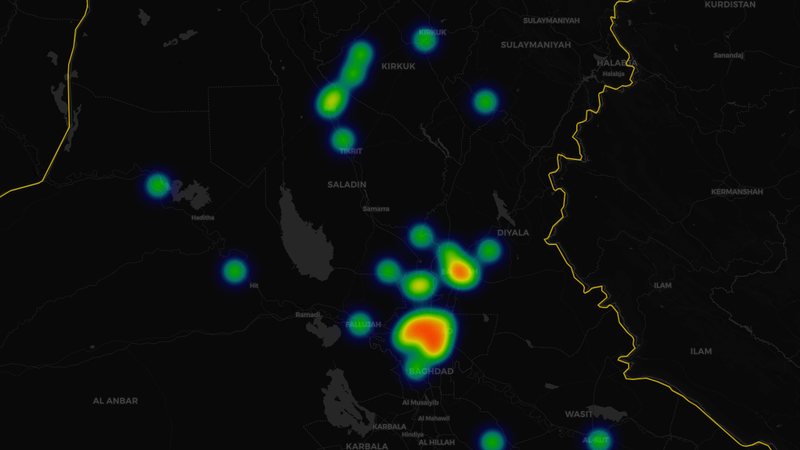
OIF/OEF SIGACTS Interactive Dashboard
Academic ProjectComprehensive data visualization dashboard analyzing 1.8M+ significant military activities in Iraq (2003-2011) and Afghanistan (2008-2014). This project was designed to map events accurately in time and space to enable veterans and support networks to contextualize traumatic events by allowing the veteran to view events from a geospatial lens. Features interactive geographic mapping with heatmap visualization, temporal analysis showing daily incident patterns, and statistical breakdowns by incident type and category. Built with server-side architecture for efficient data processing and responsive client-side rendering.
Technologies: Node.js/Express, JavaScript, Leaflet.js, ApexCharts, REST APIs
Highlights: Server-side data processing, multi-chart dashboard, temporal heatmaps, responsive design
Course instructor: Dr. André Skupin, GEOG 581, SDSU Geography
View Dashboard →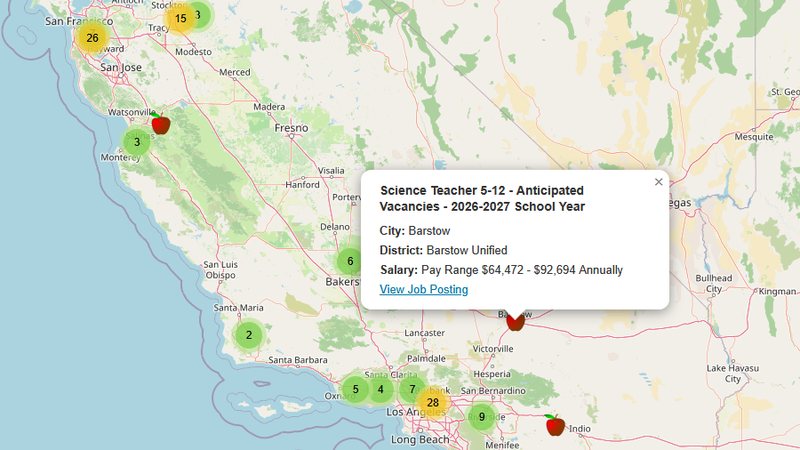
Interactive Job Mapping Application
Live ProjectFull-stack web application that visualizes education and GIS job opportunities across California. Features real-time API integration with Adzuna and EDJoin job databases, dynamic search functionality, custom markers, and interactive popups displaying job details including salary ranges and locations.
Technologies: JavaScript, p5.js, Leaflet.js, Node.js, MongoDB, REST APIs
Highlights: Real-time data integration, responsive design, custom backend deployment
Course instructor: Dr. André Skupin, GEOG 581, SDSU Geography
View Live Map →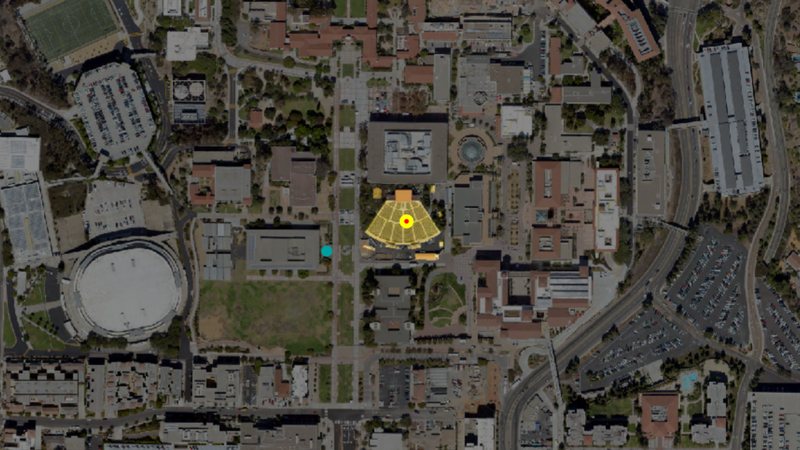
SDSU Campus Interactive Map
Academic ProjectInteractive campus map developed for San Diego State University, featuring building locations, campus facilities, and navigation tools. Designed to help students, faculty, and visitors navigate the campus effectively.
Technologies: JavaScript, p5.js, Leaflet.js, Spatial Data Collection
Skills Applied: Cartographic design, user experience, data accuracy
Course instructor: Dr. André Skupin, GEOG 581, SDSU Geography
View Interactive Map →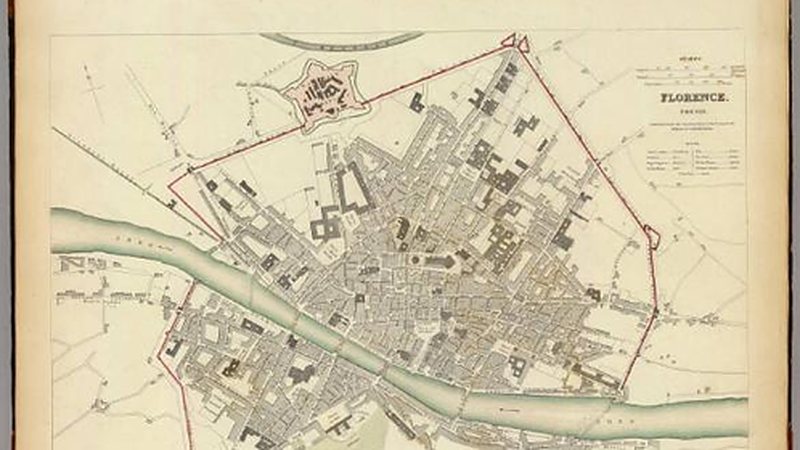
Florence, Italy StoryMap
Academic ProjectInteractive StoryMap exploring the history, culture, and geography of Florence, Italy. Combines historical research with modern mapping techniques to create an engaging narrative experience about this Renaissance city.
Technologies: ArcGIS StoryMaps, Historical Research, Multimedia Integration
Focus: Narrative cartography, cultural geography, visual storytelling
View StoryMap →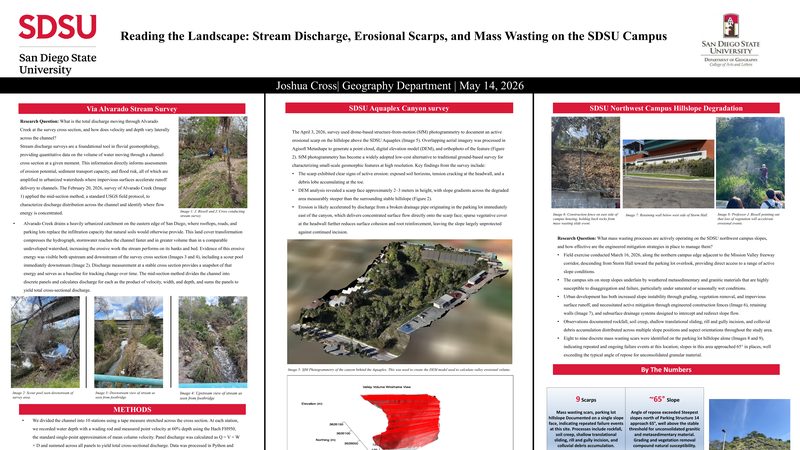
Aquaplex Canyon Terrain Analysis: GEOG 401 Poster
Academic ProjectFinal academic poster for GEOG 401 Geomorphology, documenting field surveys across three SDSU campus sites: Alvarado Creek stream discharge, UAV-derived SfM photogrammetry of the Aquaplex Canyon erosional scarp, and northwest campus hillslope mass wasting assessment. Synthesizes LiDAR, drone photogrammetry, and 3D valley volume modeling into a single formal deliverable.
Technologies: ArcGIS Pro, Agisoft Metashape, R (terra, sf, rgl), UAV SfM
Highlights: Three integrated field methods, 191,139 m³ volume estimate, GEOG 401 final deliverable
Course instructor: Dr. Justin Bissell, GEOG 401 Geomorphology, SDSU Geography
View Poster →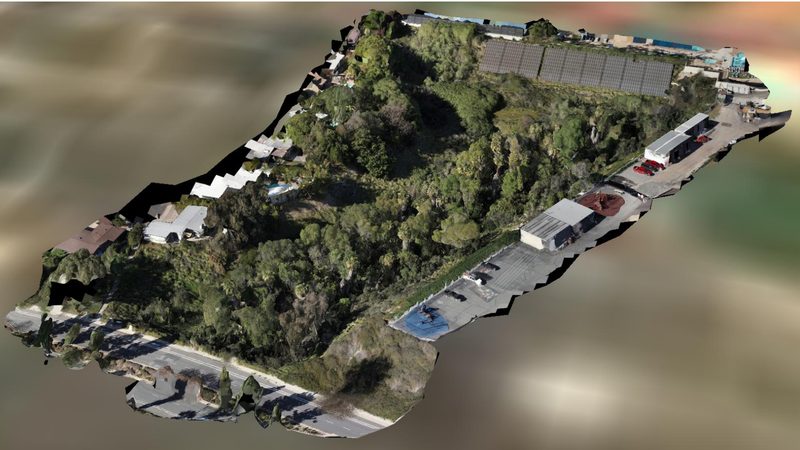
Aquaplex Canyon Terrain Analysis
Academic ProjectGeomorphic analysis of Aquaplex Canyon at San Diego State University using 1-meter USGS LiDAR-derived DEM data and UAV photogrammetry. The project quantifies valley volume through a custom east-west reference surface model, drapes a hillshade over an interactive 3D terrain visualization, and documents the canyon's erosional history and sediment dynamics.
Technologies: R (terra, sf, rgl), ArcGIS Pro, ArcGIS StoryMaps, UAV Photogrammetry
Highlights: 191,139 m³ valley volume estimate, interactive 3D wireframe, LiDAR analysis
Course instructor: Dr. Justin Bissell, GEOG 401 Geomorphology, SDSU Geography
View StoryMap → View 3D Model →